Smiley Emoji: A Craft Fair Best-Seller Review
As an embroidery designer preparing for a busy weekend at the local artisan market, I am constantly evaluating which digital embroidery file will bring the most foot traffic to my booth. Today, I am taking a close look at the Smiley Emoji design. In the world of handmade goods, sometimes the simplest concepts yield the highest returns. This review breaks down how this specific motif performs as a craft fair product, focusing on visual impact, production practicality, and sales potential for fellow Etsy sellers and boutique makers.
First Impressions: Bold, Modern, and Universally Loved
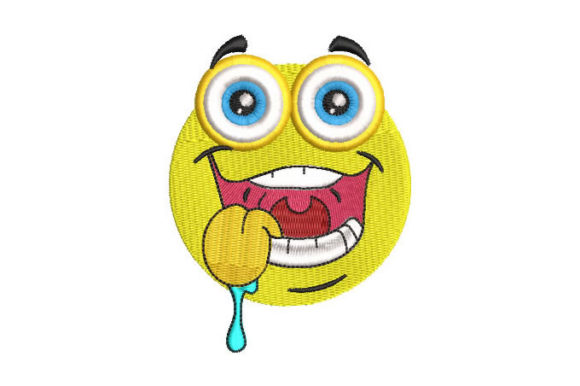
The moment I loaded the Smiley Emoji onto my screen, the vibe was immediate: it is bold, cheerful, and undeniably modern. Unlike rustic farmhouse motifs or elegant script fonts that require a specific customer demographic to appreciate, a smiley face transcends age groups. It feels playful yet clean. For a handmade product line, this universality is gold. When setting up a table display, you need items that catch the eye from three feet away. The high contrast typically associated with emoji designs—bright yellows against black outlines—ensures that this design pops whether it is sitting on a white tote bag or a navy blue backpack.
While the product category might technically fall under Toys due to its playful nature, in the context of Embroidery, it serves as a powerful graphic element. It does not try to be overly decorative or intricate; instead, it relies on instant recognition. This makes it an excellent choice for customers looking for a quick mood booster or a fun gift.
Product Versatility: Where Does It Shine?
The true test of any machine embroidery design is its adaptability across different substrates. Based on the description suggesting use on t-shirts, backpacks, and kitchen decor, here is how the Smiley Emoji performs on key market items:
- Tote Bags and Market Bags: This is likely the strongest seller. A large, centered smiley on a canvas tote creates an instant statement piece. It transforms a basic bag into a tote bag design that feels custom and trendy.
- Kitchen Linens: As tea towel embroidery or apron embroidery, the design adds a touch of whimsy to functional items. It works particularly well on waffle weave towels where the texture contrasts nicely with smooth satin stitches.
- Patches and Pouches: Scaling the design down for an embroidered patch or a small fabric pouch is a smart move for lower-priced impulse buys. These small small shop product additions increase the average transaction value at your booth.
- Caps and Hats: Embroidering on curved surfaces can be tricky, but the simple geometry of a smiley face usually holds up well on caps, provided the stitch count isn't too dense for the foam or twill.
Production Practicality and Batch Manufacturing
For those of us running a business, time is money. The Smiley Emoji appears to be highly repeatable, which is essential for batch production before a big event. Because the shapes are geometric and the color changes are likely minimal (primarily yellow, black, and perhaps white for eyes), thread swaps are fast. This efficiency allows you to churn out multiple units of inventory without burning out.
Furthermore, this design photographs exceptionally well for online listings. Whether you are creating a printable mockup for your Etsy shop or taking photos of your actual finished product for Instagram, the clear lines and bright colors render beautifully on camera. High-quality images are crucial for design assets and marketing materials, and this motif provides that "scroll-stopping" visual appeal.
Technical Considerations and Careful Use
Despite its simplicity, there are technical aspects to consider to ensure professional quality. When working with stitch density, be mindful that emoji designs often rely on solid fill areas. If the density is too high on thick fabrics like toweling or denim, the design can become stiff or cause puckering. Conversely, on stretchy knit t-shirts, insufficient stabilizer can lead to distortion.
Here are specific points to watch during production:
- Fabric Texture: On looped towels, ensure the underlay is sufficient so the base fabric doesn't peek through the yellow fill, breaking the illusion of a solid color.
- Thread Colors: Verify that the yellow thread has enough vibrancy. A dull mustard yellow can make the emoji look sad rather than happy. Test different brands to find the brightest option.
- Small Details: If the design includes tiny details for the eyes or mouth, check if they remain clear when scaled down for patches. Tiny lettering or micro-details often get lost in smaller hoop sizes.
- Dark Fabrics: Ensure the design includes a proper underlay or backing if stitching on dark garments, so the black outline doesn't blend into the shirt.
Maximizing Sales and Customer Engagement
In a crowded craft fair aisle, buyer engagement is driven by emotion. The Smiley Emoji triggers an immediate positive emotional response. It signals fun, approachability, and joy. When a customer sees a row of tote bags featuring this design, they aren't just seeing a bag; they are seeing a mood. This enhances the perceived value of the handmade product.
For commercial embroidery applications, consistency is key. Using this design across a cohesive line—matching aprons, oven mitts, and tea towels—creates a strong brand presence at your booth. It shows that you have a curated collection rather than random items. This visual consistency helps customers visualize the products in their own homes, increasing the likelihood of a sale.
Final Designer Notes Before Production
Before committing to a full production run, I always recommend a rigorous testing phase. First, test the design on scrap fabric that matches your intended final product. Check the tension and ensure the bobbin thread isn't pulling to the top. Second, confirm hoop size limitations; while the description mentions multiple sizes, always verify the maximum dimensions fit your specific machine capabilities.
Additionally, review the licensing terms carefully. The description notes the design comes with multiple options, but it does not explicitly state the license type. If you plan to sell finished goods made with this digital embroidery file, you must confirm that the license permits commercial embroidery sales. Never assume a file is free for commercial use unless stated.
Finally, create at least one real physical mockup to display at your booth. Even if you sell other items, having a tangible example of the Smiley Emoji stitched perfectly on a high-quality item serves as a proof of concept. It demonstrates your skill and the quality of the embroidery file to potential buyers.
In conclusion, the Smiley Emoji is a robust, versatile, and emotionally resonant choice for craft fair vendors. Its ability to work across various textiles, combined with its ease of production and strong visual appeal, makes it a staple worth adding to your inventory. With careful attention to stitch density and fabric choice, this design can become a cornerstone of your handmade business success.