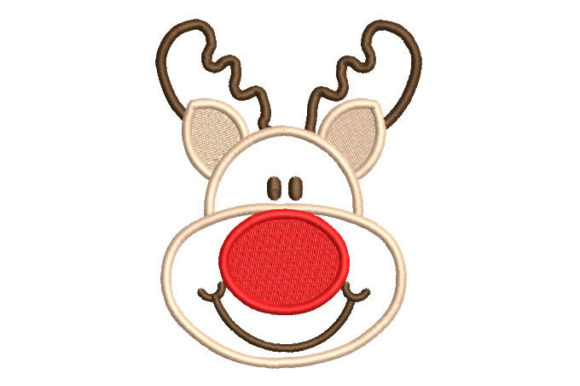
Reviewing the Linear Christmas Reindeer Face for Holiday Projects
As a designer who spends more time staring at stitch maps than actual fabric, I have learned that not all festive motifs are created equal. Some designs look charming on a screen but turn into a tangled mess of thread breaks and puckering on the hoop. Others possess a quiet elegance that translates beautifully from digital file to tangible textile. The Linear Christmas Reindeer Face falls firmly into the latter category. It is a design that understands its own limitations and leverages them to create a sophisticated, modern aesthetic that appeals to contemporary buyers.
When I first loaded this machine embroidery design into my software, I was struck by its minimalism. In an era where holiday embroidery often leans toward maximalist clutter—think dense snowflakes, heavy lettering, and complex backgrounds—this reindeer face offers a breath of fresh air. The linear approach suggests a reliance on clean running stitches and precise outlines rather than heavy fill stitches. This is crucial for anyone looking to maintain the drape and softness of their base fabric, particularly when working with garments.
The Aesthetic Appeal: Modern Minimalism Meets Tradition
The visual personality of the Linear Christmas Reindeer Face is understated yet instantly recognizable. By stripping away the bulk of traditional satin stitching, the design achieves a sketch-like quality. This makes it incredibly versatile. It does not scream "holiday decor" in a tacky way; instead, it whispers festive cheer. For Etsy sellers and small shop product creators, this subtlety is a significant selling point. Modern consumers, especially millennials and Gen Z, often prefer decor and apparel that can transition beyond the specific holiday season or fit into a neutral home aesthetic.
I recently used this design for a custom order involving a set of linen tea towels. The client wanted something festive but not overwhelming. The linear nature of the reindeer allowed the natural texture of the linen to show through the negative space. Had I used a dense fill stitch version, the towels would have felt stiff and board-like. Instead, the finished product remained soft, absorbent, and visually light. This is the kind of practical insight that separates a hobbyist from a professional craft business owner.
Real-World Application: From Sweatshirts to Tote Bags
Let us talk about where this design truly shines. I tested the Linear Christmas Reindeer Face on a mid-weight cotton canvas for a tote bag design. The results were exemplary. The clean lines held up well against the weave of the canvas, providing high contrast without requiring excessive thread coverage. This is ideal for commercial embroidery projects where production speed and material costs are factors. Less thread usage means lower cost per unit and faster run times.
However, the most impressive application was on a heather grey fleece sweatshirt. Sweatshirt embroidery can be tricky because the pile of the fabric can swallow small details. Because this design relies on strong, continuous lines rather than tiny, isolated elements, it remained crisp and legible. The thread colors I chose—a deep chocolate brown for the outline and a subtle metallic gold for the nose accent—popped against the grey without looking garish. This proves that the design is robust enough for custom apparel intended for daily wear.
For those creating baby embroidery items, such as onesies or burp cloths, the linear style is also a safer bet. Babies have sensitive skin, and heavy stitching can feel scratchy or restrictive. A lightweight, linear design minimizes contact area while still delivering a cute, festive look. It is a thoughtful choice for personalized gift makers who prioritize comfort alongside aesthetics.
Technical Considerations and Fabric Compatibility
While the design is forgiving, it is not invincible. As with any digital embroidery file, success depends on proper stabilization and fabric selection. Because the design is linear, it lacks the structural integrity that dense stitching provides. This means it is less suitable for stretchy, unstable knits unless you use a high-quality cut-away stabilizer. If you attempt to stitch this on a thin, slippery polyester without adequate support, you risk distortion. The lines may wander, ruining the clean geometric appeal of the reindeer’s face.
I also advise caution when using this on very dark fabrics if you plan to use dark thread. Without the volume of a satin column to catch the light, thin linear stitches can disappear into black or navy cotton. In these cases, consider using a contrasting thread color or adding a subtle underlay if your machine allows for customization. Always test the design on scrap fabric first. Check the stitch density settings in your software to ensure they match your needle size and thread weight. A 40-weight rayon thread might look too thick for delicate lines, whereas a 60-weight polyester could provide the crisp definition the design demands.
Commercial Viability and Brand Consistency
For design assets creators and digital product sellers, the Linear Christmas Reindeer Face offers high commercial potential. Its simplicity makes it easy to integrate into larger compositions. You can pair it with minimalist typography for greeting cards, patch designs, or even laser-cut leather accents. The lack of complex gradients or shading means it reproduces well in printable mockup previews, helping customers visualize the final result accurately.
From a branding perspective, using this design signals a certain level of sophistication. It tells your customer that you value quality over quantity. It fits seamlessly into a boutique brand identity that focuses on handmade, artisanal goods. Whether you are selling embroidered patches at a craft fair or listing holiday embroidery patterns online, this design helps build trust. It looks professional, intentional, and well-executed.
Final Designer Notes
Before you commit to a large production run, remember to verify the technical specifications. Since the product description does not list exact hoop size requirements or file formats, you must check these details before purchase. Ensure the design is compatible with your machine’s memory and hoop capabilities. If you are new to linear designs, start with a smaller project, like a pocket square or a single napkin, to gauge how your machine handles the stop-and-start nature of running stitches.
In conclusion, the Linear Christmas Reindeer Face is a standout choice for designers who appreciate nuance. It respects the fabric it is stitched on, appeals to modern tastes, and offers versatility across various embroidery project types. It is not just a festive icon; it is a tool for creating refined, marketable, and beautiful handmade products. Use it wisely, stabilize it properly, and let its simple charm elevate your holiday collection.