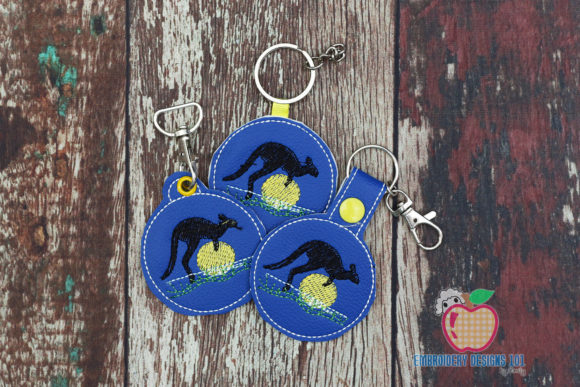
Kangaroo in the Hoop Keyfob: A Designer’s Review
As an embroidery designer who has spent years digitizing and testing files for commercial use, I approach every new machine embroidery design with a critical eye. It is not just about whether the image looks cute on a screen; it is about how it performs under the needle, how it holds up after washing, and most importantly, how it serves the brand identity of the small business owner using it. Recently, I evaluated the Kangaroo in the Hoop Keyfob, a design categorized under Wild Animals, to determine its viability for professional merchandise and branded applications.
The first impression of this design is undeniably playful and approachable. The kangaroo motif suggests a sense of fun, agility, and perhaps a touch of Australian charm or wildlife appreciation. For businesses in the creative sector, such as boutique gift shops, pet brands, or outdoor adventure clubs, this visual personality aligns perfectly with a friendly and accessible brand voice. However, when we move from aesthetic appeal to practical application, we must ask: does this embroidery file deliver the professional finish required for commercial embroidery projects?
Real-World Applications for Small Business Merch
The primary function of the Kangaroo in the Hoop Keyfob is, as the title suggests, to create a finished key accessory using the in-the-hoop technique. This is a significant advantage for Etsy sellers and crafters. In-the-hoop projects are highly marketable because they result in a tangible, finished product rather than just a patch that requires additional sewing. For a small business, this means you can offer a low-cost, high-margin add-on item at checkout. Imagine a local bakery selling these alongside their packaged cookies, or a florist attaching them to bouquet wraps as a memorable customer gift. The tactile nature of an embroidered keyfob adds perceived value to the transaction.
Beyond the keyfob application, the design itself can be adapted for various small business merch items. If the digitization allows for scaling, this kangaroo could serve as a charming accent on tote bags. A tote bag design featuring a whimsical animal appeals strongly to the eco-conscious consumer who values handmade aesthetics. Similarly, for children’s apparel brands or educational centers, this design could work well on caps or bibs. The key here is versatility. A strong digital embroidery file should not be limited to one output; it should be a flexible asset in your library of design assets.
For service-based businesses, such as cafes or creative studios, consider using this motif on staff uniforms. While a full-back logo might be too bold, a small kangaroo on the chest pocket of an apron or the sleeve of a work shirt adds a layer of personality. Apron embroidery is particularly effective in hospitality because it is visible during customer interactions. It breaks the monotony of standard uniforms and sparks conversation, enhancing customer engagement without compromising professionalism.
Technical Considerations and Stitch Performance
When reviewing any design for commercial use, stitch density and thread color contrast are paramount. The description notes that the design is "fun and easy to create," which often implies a lower stitch count and simpler color changes. This is generally positive for production speed, but it requires careful inspection. Low-density designs can sometimes look sparse on textured fabrics. If you are embroidering on a heavy canvas tote or a rough linen apron, the fabric texture might show through the stitches, making the design look incomplete. In such cases, using a cut-away stabilizer is crucial to provide a smooth foundation and prevent puckering.
Another critical factor is the hoop size. In-the-hoop projects require precise alignment. Before running a production batch, you must confirm the hoop size compatibility with your machine. A misaligned hoop can ruin the closure mechanism of a keyfob, rendering the finished product unusable. I always advise running a test stitch-out on scrap fabric identical to your final material. Check the registration of the edges and ensure the kangaroo’s details—such as the eyes and pouch—are clearly defined and not lost in dense stitching.
Color selection also plays a vital role in the final outcome. While the default thread colors in the preview might be vibrant, consider how the design translates into your brand’s palette. Does the kangaroo need to be brown and earthy, or would a monochromatic version in navy or black look more sophisticated for corporate gifts? Testing the design in black and white first is a pro tip. If the design loses its definition without color, it may rely too heavily on hue rather than shape, which can be problematic for single-color uniform embroidery.
Brand Identity and Customer Trust
Consistency is the cornerstone of brand identity. Using a cohesive set of embroidered patch styles or motifs across different products helps build recognition. If your brand utilizes animal imagery, the Kangaroo in the Hoop Keyfob can be part of a larger collection. However, ensure that the style of this kangaroo matches your other graphics. A hyper-realistic lion paired with a cartoonish kangaroo can create visual dissonance. For handmade brands, this consistency signals professionalism and attention to detail, fostering trust with buyers who are investing in your handmade product.
Furthermore, the quality of the embroidery reflects directly on the perceived quality of your business. Loose threads, poor tension, or misaligned designs can detract from even the best marketing efforts. By rigorously testing this design, adjusting tension settings, and using high-quality threads, you elevate the finished product. Customers associate the durability and neatness of the embroidery with the reliability of your brand. A well-executed kangaroo keyfob becomes a lasting reminder of your business every time the customer uses their keys.
Practical Notes for Production
Before integrating the Kangaroo in the Hoop Keyfob into your product line, take these practical steps:
- Verify Licensing: Always confirm the commercial licensing terms provided with the file. Ensure you have the right to sell physical items made with this design.
- Check File Formats: The description mentions "multiple embroid" formats, but verify that your specific machine format is included. Do not assume conversion software will maintain the integrity of the stitch path.
- Create a Printable Mockup: Use digital mockups to visualize the design on various items like caps, bags, and aprons before stitching. This saves time and materials.
- Test on Curved Surfaces: If applying this as a patch on a cap, test how the design distorts on the curved front panel. Cap embroidery requires specific stabilization techniques to prevent crushing the fabric.
- Evaluate Wash Durability: Wash your test sample multiple times. Check for thread breakage or fabric distortion, especially if the item is intended for frequent use, such as a work apron.
In conclusion, the Kangaroo in the Hoop Keyfob offers a delightful opportunity for small businesses to expand their merchandise offerings. Its playful nature fits well within the Wild Animals category, appealing to a broad audience. However, its success in a commercial setting depends entirely on technical execution. By paying attention to stabilizer choice, thread contrast, and hoop alignment, you can transform this simple design into a premium brand asset. Whether used as a standalone key accessory or integrated into a broader custom apparel line, this design has the potential to enhance your brand’s visual storytelling and drive customer loyalty.